
Dogs · Food safety
Can Dogs Eat Grapes? Why Grapes and Raisins Are Toxic to Dogs
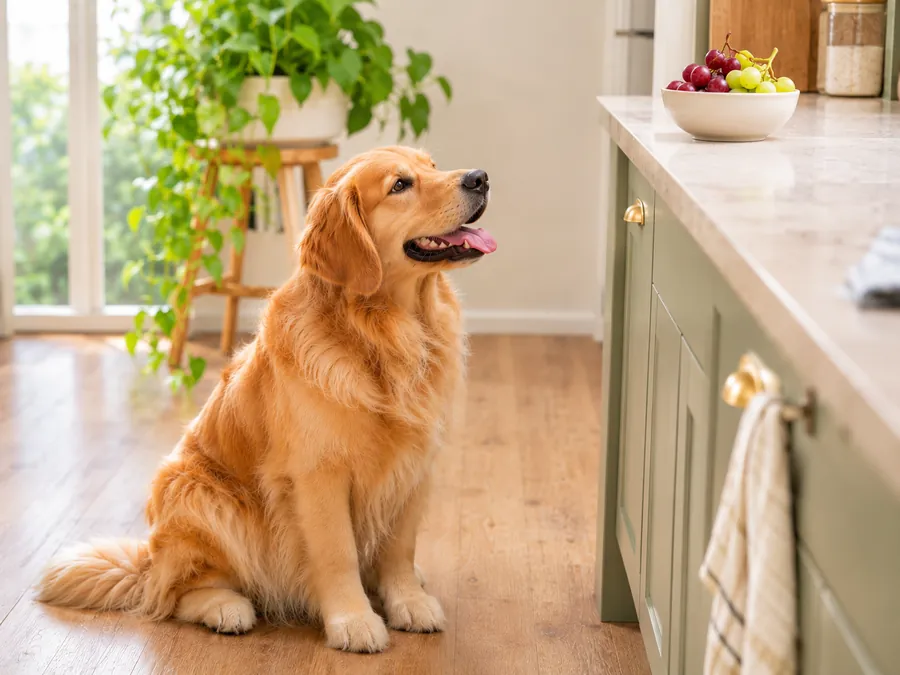
No. Dogs should never eat grapes or raisins, in any amount. Grapes of every colour, peeled or not, and dried versions such as raisins can cause sudden kidney failure in some dogs, and there is no known safe amount: some dogs get seriously ill after a single grape. If your dog has eaten any grapes or raisins, call your vet or the Pet Poison Helpline (855-764-7661) straight away, even if they seem fine. Don't try to make your dog vomit at home unless a vet tells you to.
| Safe for dogs? | No. Grapes, raisins and grape jelly or jam are toxic |
|---|---|
| Safe amount | None. Even one grape can harm some dogs |
| Main danger | Acute kidney failure, which can be fatal |
| Symptoms start | Vomiting or diarrhoea often within hours; kidney damage within 24–72 hours |
| If your dog ate some | Call your vet or Pet Poison Helpline (855-764-7661) now; don't wait for symptoms |
Why are grapes dangerous for dogs?
Grapes and raisins can cause acute kidney injury in dogs. The AKC says the exact toxic compound is still not confirmed, but research cited by PetMD points to tartaric acid: dogs have a limited ability to get rid of this type of acid, so it can build up and damage the kidneys.
The toxin is in both the flesh and the skin, so peeled grapes are just as risky. Raisins are more concentrated than fresh grapes, and every colour of grape (red, green, purple and white) is a problem. Whole grapes are also a choking hazard for small dogs.
How many grapes are toxic to a dog?
There is no safe number. Vets have linked kidney failure to as little as one grape or raisin per 10 lb of body weight, but severe reactions have happened with even smaller amounts, and smaller dogs need less to be harmed.
Dogs also react unpredictably: some get very ill after a single grape, while others eat grapes without obvious problems. Because there's no way to know which group your dog is in, vets treat any grape or raisin ingestion as an emergency.
Foods that can hide grapes and raisins
- Raisins and other dried grapes on their own or in snack packs
- Breads, buns and pastries made with raisins
- Cereals, granola and trail mix
- Desserts and baked goods with raisins
- Grape jelly and jam, which can still contain the toxin (and some contain xylitol, also toxic to dogs)
Check labels before sharing any human food, and keep fruit bowls and lunch boxes out of reach.
Symptoms of grape poisoning in dogs
Signs don't always show straight away. Vomiting or diarrhoea often starts within the first few hours, and you may see grape or raisin pieces in the vomit. The AKC notes many signs develop 6–12 hours after eating, and kidney injury can show on blood tests within 24–72 hours.
- Vomiting and diarrhoea
- Loss of appetite
- Lethargy, weakness or unusual quietness
- Abdominal pain
- Dehydration
- Drinking and peeing more than usual (an early sign of kidney trouble)
- Peeing less or not at all (a sign the kidneys are shutting down)
- Tremors or bad breath
Watch closely for at least the first 24–48 hours, but don't wait for symptoms before getting help.
What to do if your dog ate grapes or raisins
- Call your vet or an emergency vet now, even if it was only one grape or raisin. You can also call the Pet Poison Helpline on 855-764-7661 (a fee applies).
- Tell them your dog's weight, roughly how many grapes or raisins were eaten, and when.
- Don't make your dog vomit at home unless a vet tells you to. The AKC warns against hydrogen peroxide because it can cause serious lung damage if inhaled.
- Go in quickly. Making a dog vomit is most useful within about three hours, and dogs should still be checked and have blood work after that.
How vets treat grape poisoning
If your dog is seen early, the vet may induce vomiting and give activated charcoal to absorb what's left. Many dogs then get IV fluids to protect the kidneys, along with anti-nausea medicine, and stay in hospital for about 48–72 hours with blood tests at 24, 48 and 72 hours.
The sooner treatment starts, the better the outlook. Mildly affected dogs can recover, sometimes with reduced kidney function. Dogs whose kidneys stop producing urine have a very poor prognosis, which is why fast action matters.
Safe fruit to give instead
If your dog loves a sweet snack, try small amounts of dog-safe fruit such as blueberries, watermelon, bananas, strawberries or apple slices, prepared the right way.
Frequently asked questions
Can one grape kill a dog?
It can make some dogs seriously ill. Even a single grape has caused kidney failure in sensitive dogs, and there's no way to predict which dogs will react, so call your vet after any amount.
My dog ate a grape and seems fine. What should I do?
Call your vet or the Pet Poison Helpline now anyway. Symptoms can take hours to appear, and kidney damage can show on blood tests 24–72 hours later; early treatment gives the best outcome.
Are raisins worse than grapes for dogs?
Raisins are more concentrated, so a small handful can be very dangerous. Treat raisins, sultanas and other dried grapes as just as risky as fresh grapes, or more.
Can dogs eat peeled or seedless grapes?
No. The toxin is in the flesh as well as the skin, so peeled and seedless grapes are still dangerous.
Can dogs have grape jelly or grape juice?
No. Grape jelly and jam can still contain the toxin, and some contain xylitol, which is also toxic to dogs. Avoid any grape-based food or drink.
How long after eating grapes will a dog get sick?
Vomiting or diarrhoea often starts within a few hours, many signs show within 6–12 hours, and kidney problems can develop over 24–72 hours.
Sources
This guide is general information, not veterinary advice. Every dog is different; ask your vet before changing your dog's diet, especially if your dog has diabetes, is overweight, or has a sensitive stomach.